Two ancient-inspired relics appear prominently within You Are Magic: the Sun + Moon relic on the truck and the Feathered Serpent on the Box of Possibility.
They are not here as decorative shorthand for Mexico, nor because they simply look mystical or beautiful. They came to us through relationship.
The relics were shared with us by a Mexican stone carver and teacher near the pyramids of Teotihuacan, together with teachings about their meanings and their use as objects of intention. We encountered them not simply as images, but as part of a larger philosophical tradition concerned with consciousness, balance, transformation, possibility, and the power of human intention.
That provenance shapes how we use them.
THE SUN + MOON
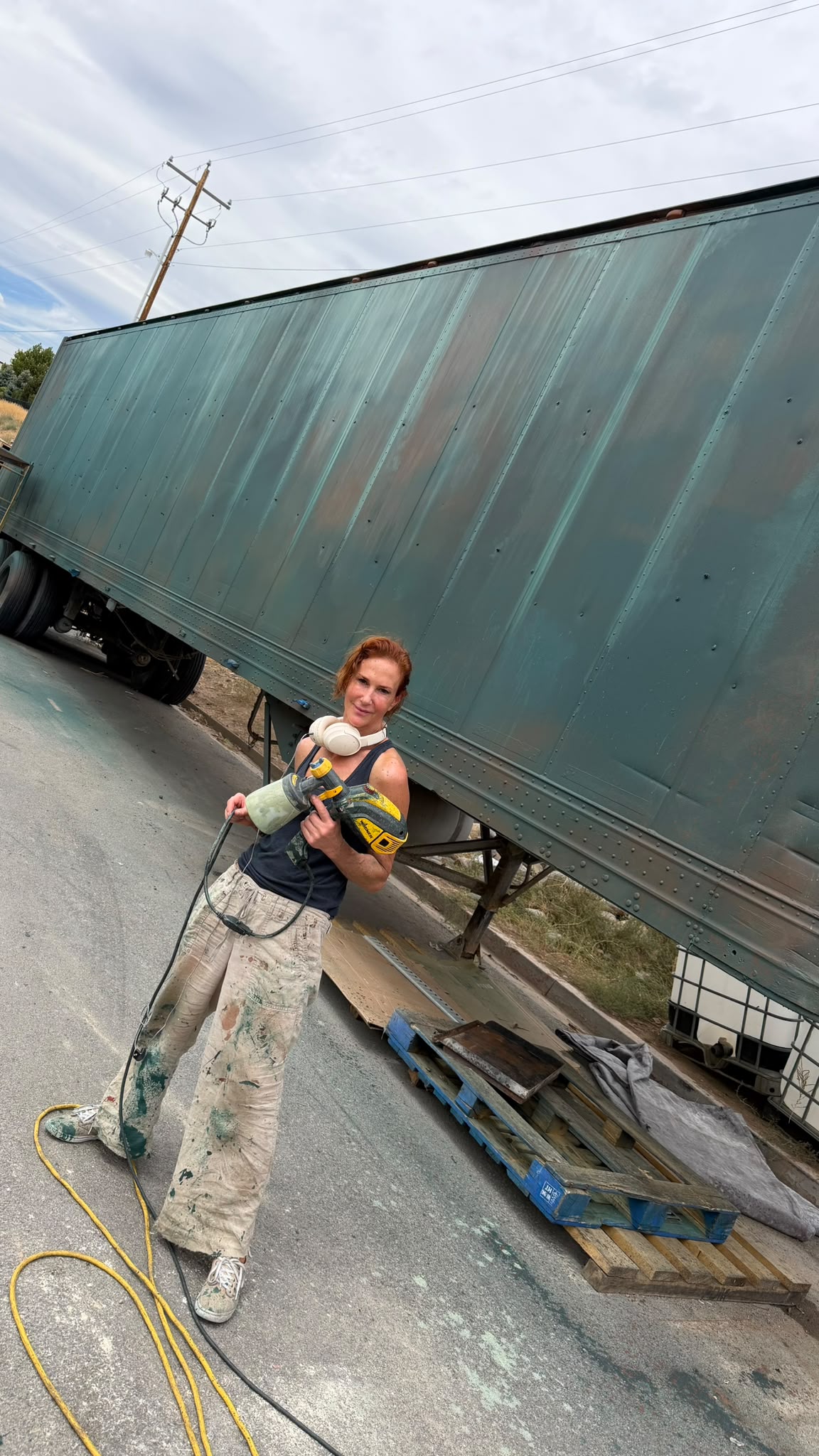
The Sun + Moon relic anchors the truck and the central idea of You Are Magic.
Within the teaching shared with us, the image speaks to balance: light and darkness, action and reflection, visible and invisible, the individual and the collective.
That tension sits at the heart of the installation.
You Are Magic asks us to consider a deceptively simple proposition: human beings participate in creating the worlds they inhabit. What we notice, believe, imagine, choose, and contribute becomes part of the collective reality around us.
The Sun + Moon relic becomes a threshold into that idea.
It asks us to hold seemingly opposite things at once and to recognize that transformation rarely comes from one force alone. Intention requires action. Individual imagination becomes powerful when it enters community. Darkness makes light legible.
The relic therefore does not function as ornament. It functions as an invitation to reflection.
THE FEATHERED SERPENT
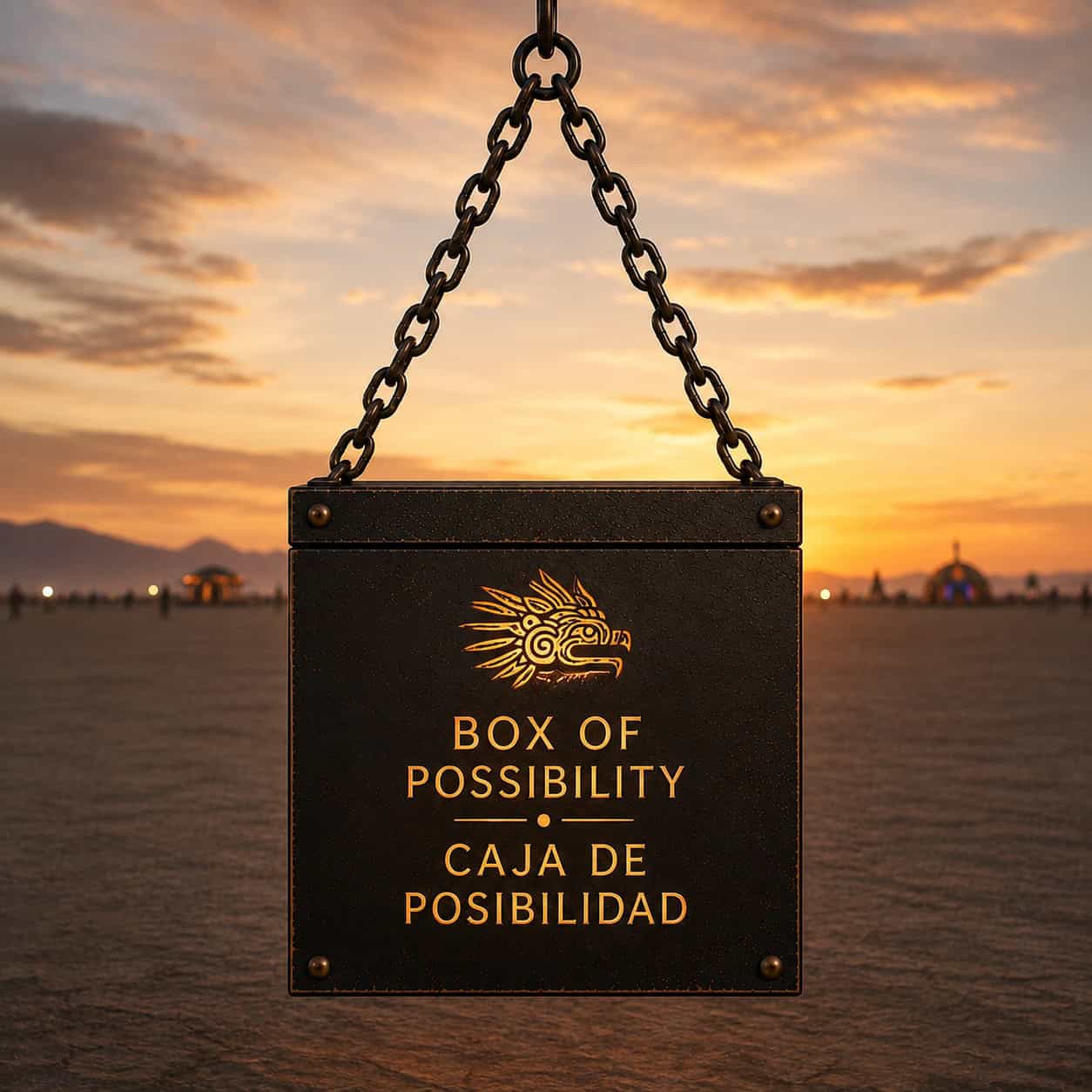
The Feathered Serpent appears on the Box of Possibility, where participants encounter another central idea in the work: transformation.
The Feathered Serpent has deep roots at Teotihuacan itself. One of the ancient city’s most important monuments is the Temple of the Feathered Serpent, built around the third century. Mexico’s National Institute of Anthropology and History describes the feathered serpent as an important figure in Teotihuacan religious imagery, associated with forces including water, wind, calendrical time, agricultural cycles, and renewal. Scholars are careful not to assume that the Teotihuacan figure is identical in every respect to the later deity known as Quetzalcoatl, but its importance within Teotihuacan’s sacred landscape is unmistakable.
That complexity matters to us.
We are not collapsing centuries of Mesoamerican history into a single convenient mythology. We are using a symbol that was shared with us through a contemporary Toltec teaching tradition while acknowledging that its archaeological history is older, richer, and more complicated.
For You Are Magic, the Feathered Serpent is especially resonant on the Box of Possibility.
A serpent sheds its skin.
A feather reaches toward the sky.
The image holds earth and air, weight and flight, what we have been and what we might become.
That makes it a powerful companion to a box devoted to possibility, intention, and transformation.
Participants are invited to consider what they want to release, what they want to create, and what they might carry differently into the world.
Again, the symbol is not the spectacle.
The idea it carries is the invitation.
RESPECT, NOT OWNERSHIP
We are deliberate about the way both relics appear in the work.
We preserve them intact rather than breaking them apart into generic decorative patterns. We acknowledge where they came from. We explain what we were taught about them. And we distinguish between archaeological history and the contemporary philosophical tradition through which these particular relics reached us.
We do not claim these symbols as our inventions or our cultural property.
We understand ourselves as temporary stewards.
That distinction matters because cultural appropriation is most troubling when imagery is extracted from the people and places that carry it, stripped of meaning, anonymized, exoticized, and turned into someone else’s aesthetic property.
Our intention is the opposite.
Name the source.
Preserve the meaning.
Honor the form.
Credit the teachers.
Teach rather than exoticize.
Invite participation rather than claim possession.
The larger project extends that ethic into economic life as well. Our work in Mexico is connected to a social-enterprise effort creating skills, paid work, production capacity, and access to commerce for women and artisans in rural communities.
We believe cultural exchange should not operate in only one direction.
If inspiration, knowledge, craftsmanship, and meaning travel outward from Mexico, opportunity and economic value should remain connected to Mexican people and communities as well.
None of this means good intentions place a project beyond criticism. Respect requires continuing attention, listening, attribution, accuracy, and a willingness to change when something has been misunderstood.
But we also do not believe respect requires placing living ideas behind glass.
Teotihuacan was one of the great sacred and cultural centers of the ancient Americas. UNESCO describes its cultural and artistic influence as extending throughout Mesoamerica and beyond. Its monuments still confront us with questions that remain profoundly human: Who are we? What do we intend? What are we becoming? And what do we create together?
Those questions belong in You Are Magic.
The Sun + Moon asks us to seek balance and consciousness.
The Feathered Serpent asks us to imagine transformation and renewal.
And the human being standing before them supplies the final element:
intention.
We are not claiming these symbols as ours.
We are carrying forward something that was shared with us, with context, gratitude, and care.
Not costume, but meaning.
Not extraction, but exchange.
Not ownership, but stewardship.